
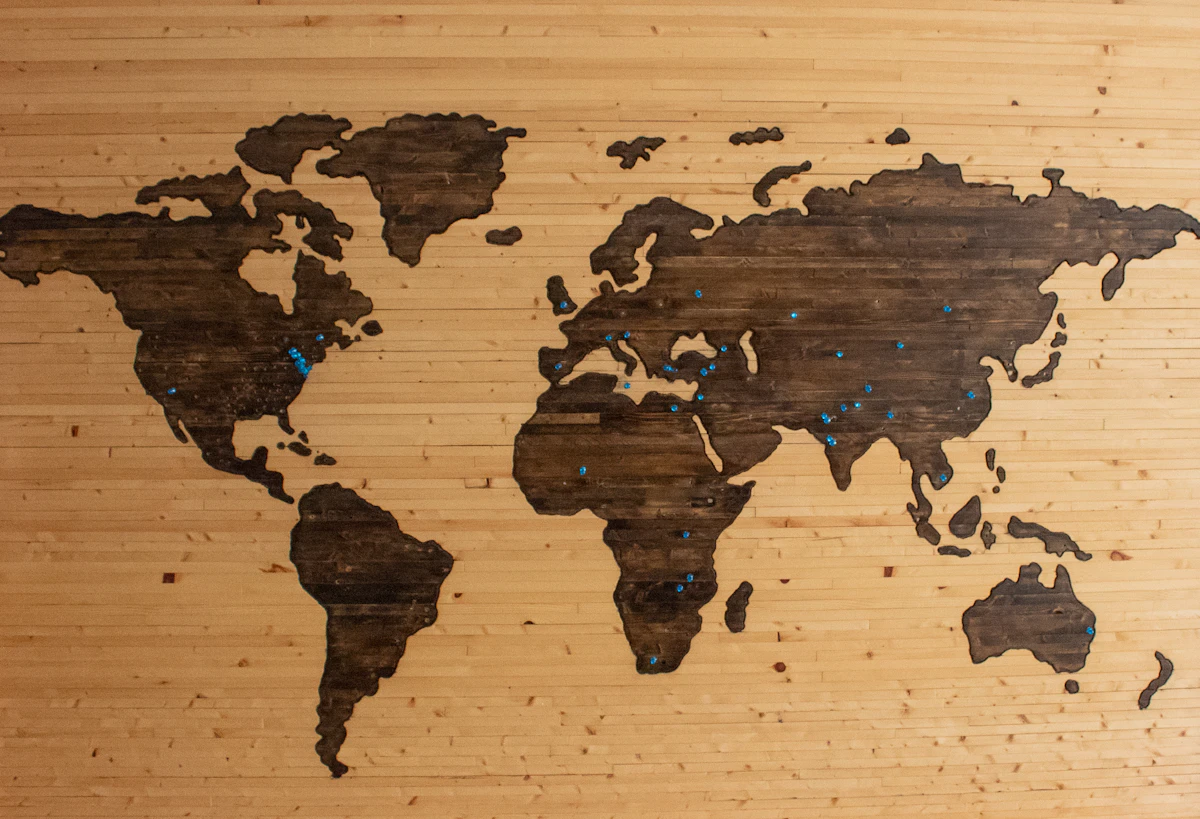
A trademark filed or registered in the Republic of Moldova does not automatically provide protection abroad. A business that exports, sells online or negotiates with foreign distributors should plan territorial expansion before the brand enters target markets. The Madrid System can simplify the administration of an international filing, but every designated country retains the right to examine and refuse protection under its own law.
Why international protection matters
Trademark rights are territorial. An AGEPI registration has effect in the Republic of Moldova, not in every country where a website is visible or products can be delivered. Using a brand abroad without a filing strategy can leave room for a third party to seek a conflicting mark and complicate a launch, distribution arrangement or marketplace listing.
Relevant countries should be selected according to actual business plans: where goods or services are or will be sold, where production takes place, where distributors operate and where copying risk is material. Filing “everywhere” is rarely budget-efficient. A staged strategy can prioritize near-term markets and preserve options for later expansion.
Madrid System overview
The Madrid System, administered by the World Intellectual Property Organization (WIPO), allows an applicant to submit an international application through its office of origin and designate system members where protection is sought. It does not create a single “worldwide trademark.” After formal examination and international registration, each designated office examines the request under its domestic rules.
A national office may grant protection, issue a provisional refusal or require a response through local counsel. Rights in designated members can be managed centrally for certain operations, including renewal and recording some changes, but local examination, disputes and enforcement remain separate.
Using Moldova as the filing base
To use Moldova as the office of origin, the applicant must have the required connection with the Republic of Moldova and a basic AGEPI application or registration. The mark and owner in the international application must correspond to the basic record, and the international list of goods and services cannot be broader than the list covered by that basis.
For the first five years, the international registration depends on the basic application or registration. If the basis is withdrawn, refused, cancelled or restricted during that period, international protection may be affected to the same extent. The initial clearance, ownership decision and specification filed with AGEPI therefore deserve careful preparation. For help with the base filing and wider strategy, see our trademark registration service.
Example destinations: China and Canada
China and Canada are examples of Madrid contracting parties that may be designated when they fit the owner's commercial plan. Their designation does not mean Lumis is a local Chinese or Canadian firm, and it does not guarantee protection. Lumis can coordinate an international application originating in Moldova; if a local objection arises, an authorized representative in that jurisdiction may need to be engaged.
For China, the strategy should consider the version of the mark used in the market, including any Chinese-character name, class coverage and third-party filing risk. For Canada, the goods and services should be described precisely enough for local examination. These examples show why one specification and one strategy should not be applied mechanically to every jurisdiction.
Filing process
- identify priority markets and confirm that they participate in the Madrid System;
- settle the owner, representation of the mark and goods or services;
- conduct preliminary searches relevant to Moldova and the intended destinations;
- file or confirm the basic AGEPI application or registration;
- prepare the international application, designations and applicable fees;
- AGEPI certifies and forwards the file to WIPO for formal examination;
- monitor notices from each designated office and answer any refusal within local deadlines.
Additional countries can later be added by subsequent designation if the strategy expands. The effective date and legal status should be checked separately for every territory.
How costs are structured
The budget may include an AGEPI transmittal fee, WIPO fees, individual or complementary fees for designated members, and professional fees for analysis, preparation and monitoring. The total depends on the countries, classes, any colour reproduction and fees set by each contracting party. WIPO's fee calculator and the AGEPI tariff should be checked at the filing date.
Provisional refusals, oppositions, translations, enhanced searches and local representation are generally not automatically included in the initial filing cost. A responsible estimate separates official fees from professional charges and identifies events that may create additional expense; it cannot guarantee acceptance in every designated country.
FAQ
Does the Madrid System create one trademark valid worldwide?
No. It is a centralized filing and management mechanism. Protection exists only in designated members that do not refuse the request.
Can China and Canada be designated from a Moldova-based filing?
In principle, yes, because both participate in the Madrid System. The applicant's entitlement, AGEPI basis, specification and fees must be checked for the particular filing.
Do I need local counsel in every country?
Not necessarily for the initial designation. If an office issues a refusal or a local proceeding begins, appointing an authorized local representative may be mandatory or prudent.
Can countries be added later?
Yes, through a subsequent designation if the country is a member and current requirements are met. Protection in the newly designated country does not retroactively adopt every earlier date.
How long does the process take?
WIPO performs formal examination, after which each office follows its own examination period and practice. Timing and outcome cannot be guaranteed.
The materials above are for informational purposes only and do not constitute personalized legal advice. Membership, rules, fees and practice may change; check current AGEPI and WIPO sources and obtain advice for your specific circumstances.